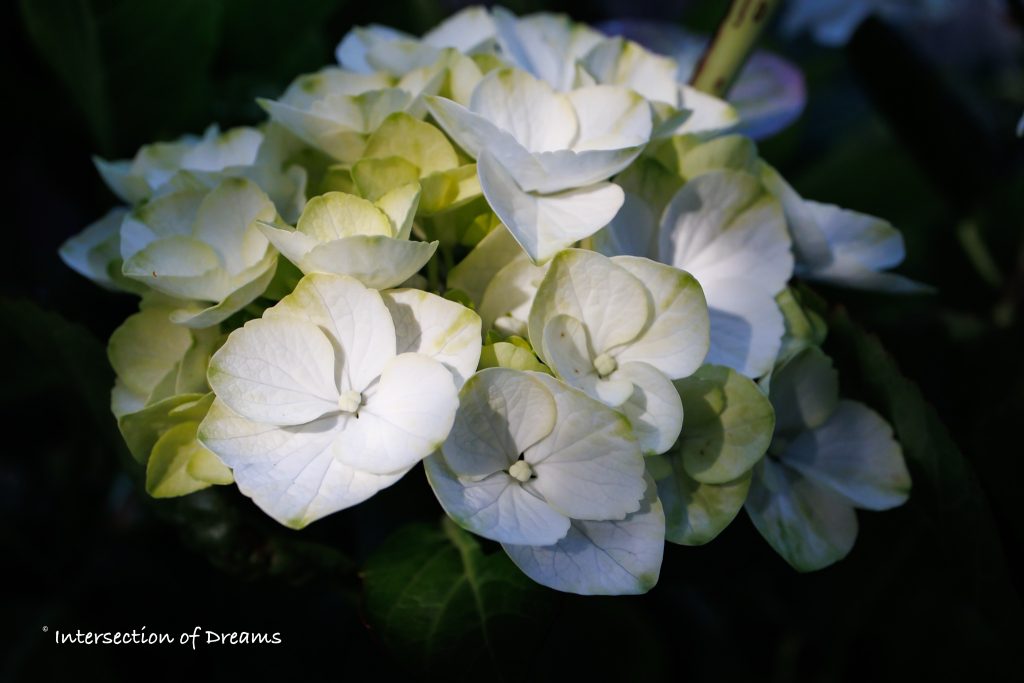
When I started my garden at the townhouse, most of the space was paved courtyards and decks, so a lot of my plants were potted in containers instead of planted in ground. Which ended up working out well because it meant I could bring them with me when I sold the townhouse and moved out to the Olympic Peninsula. It’s been a long year and a half getting all the plants moved, moved again, and settled into the new, maturing garden space. But the big hydrangeas which I first potted years ago and hauled all those miles are having their best blooming season in years so they obviously really like the new location.
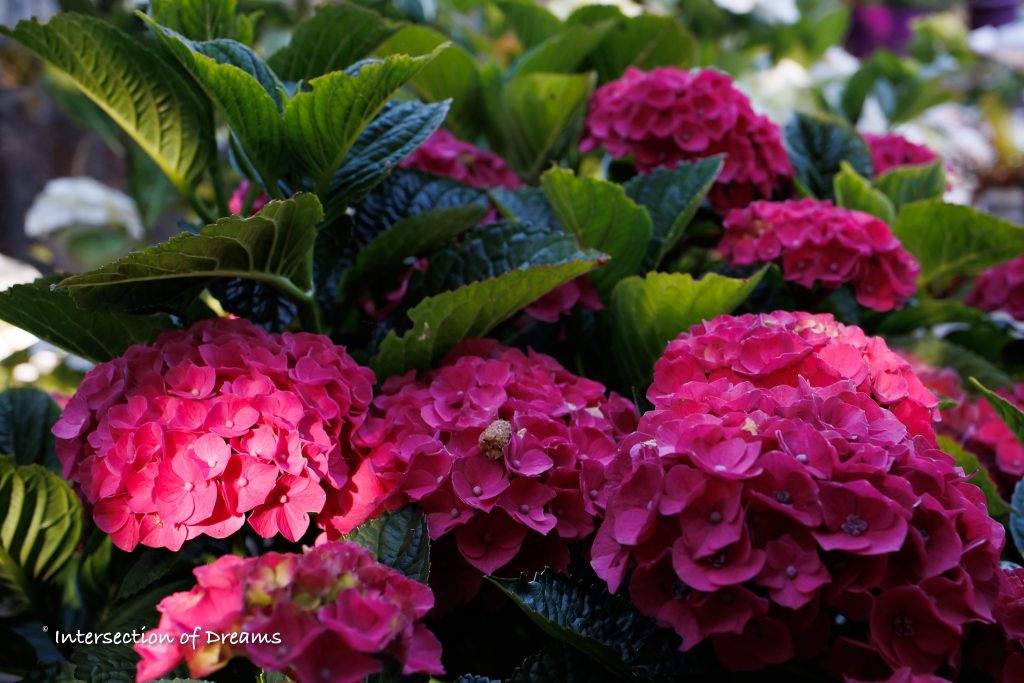
The first Hydrangea that I acquired was Seaside Serenade Newport, on the second anniversary of my ginger cat Max passing away. This one is a gorgeous deep dark pink color, and it loves shady garden corners with just a tiny bit of sun. Unlike many other Hydrangea Macrophyllas, this one does not change color depending on soil acidity.
Later that same year, my local garden center got some interesting varieties in stock and I added a couple more to my collection. One of them is Spike, a color-changing Hydrangea Macrophylla variety. Spike is planted in a non-acidic soil and usually blooms in a light pinkish purple, although the color can change depending on the bloom cycle and soil additives.
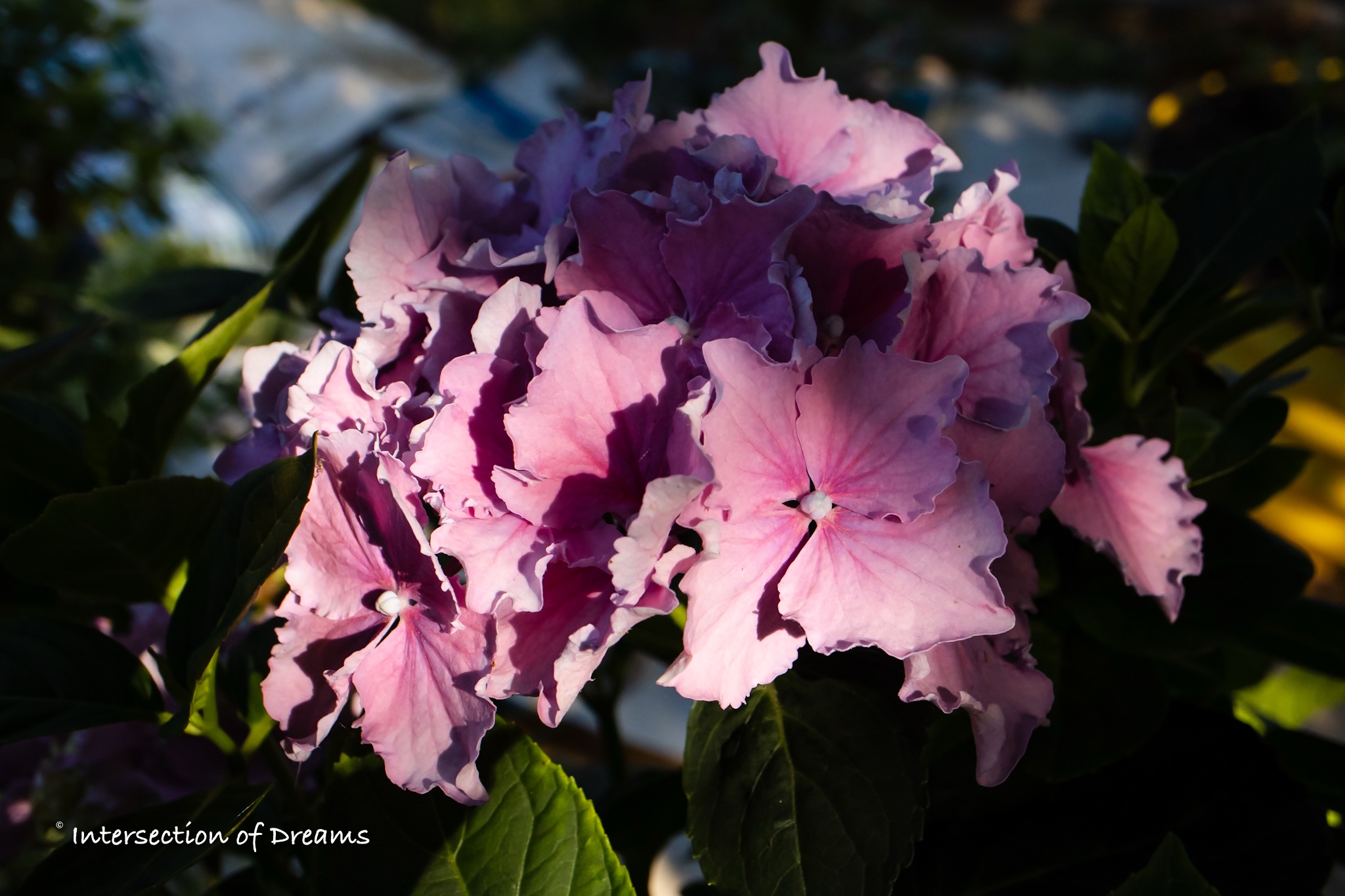
Another color-changing variety is Hydrangea Macrophylla Star Gazer, which has an interesting color pattern that turns blue in acidic, high aluminum soil. Since those conditions aren’t present mine blooms dark pink instead.
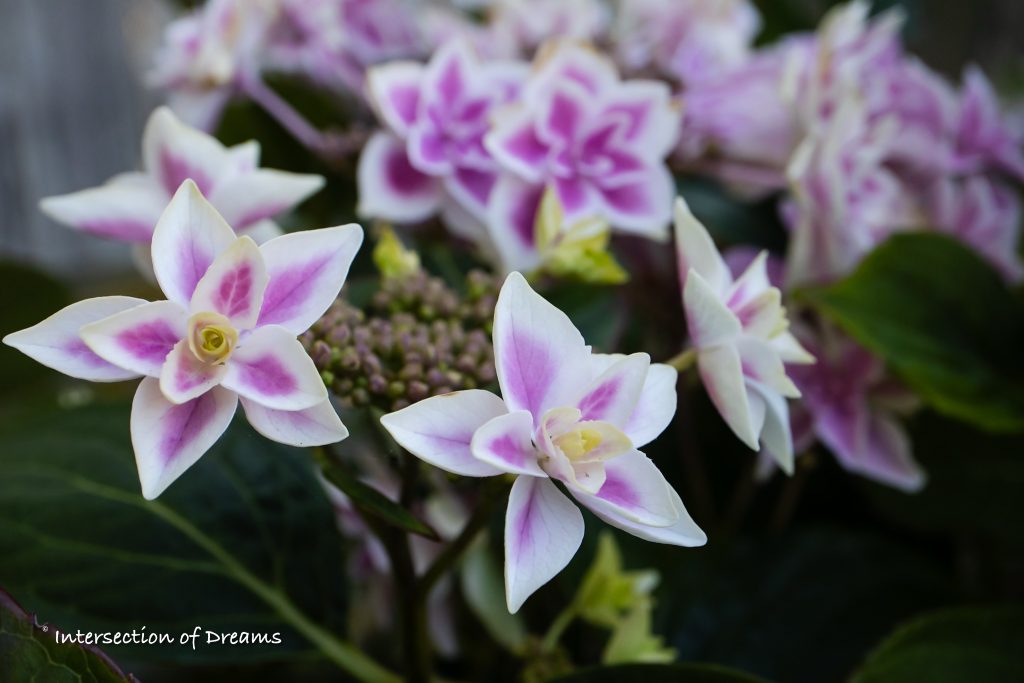
The following year I went in search of more interesting Hydrangeas, and my local nursery came through again with Hydrangea Panicle Bombshell. This one has small, delicate leaves and even smaller, more delicate blooms that are a soft white tinged with pink and the center becomes more pink as the blooms age. It was a little fussy the first few years but this year has gone absolutely mad and is blooming profusely.
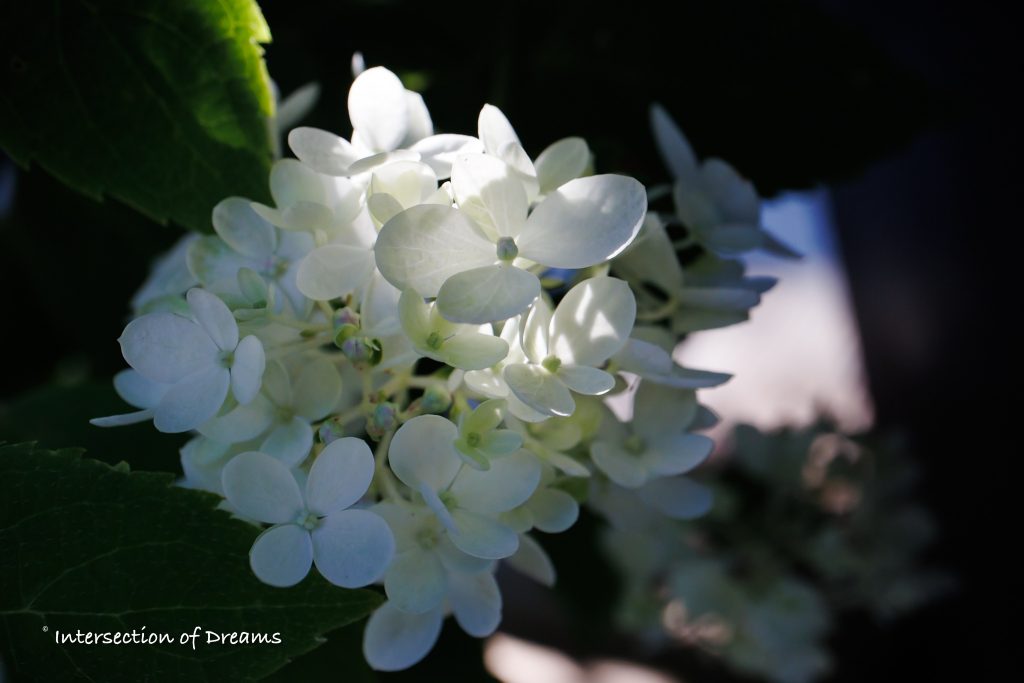
And last but not least, possibly my favorite of all the large Hydrangeas in my collection, Hydrangea Macrophylla Adore. This one was rescued from the clearance rack at Lowe’s, so wilted and pale that it looked nearly dead. But it’s hard to kill a Hydrangea, so I brought it home, watered it, potted it with some acidic planting mix, and gave it a little fertilizer boost. It perked right up and bloomed a bit that year, and has been producing blooms almost as large as my head in all the years since. The flowers on this one start out a gorgeous pure bright white then fade to green with age, and it’s usually the first to bloom in spring and the last to finish blooming in fall.